The author focuses mainly on wire craft and other folk crafts. She became fascinated with working with materials as a child, when she learned textile techniques, loom weaving, embroidery, and sewing rag toys from her grandmother in Liptov. Under her mother's guidance, she learned to sew clothes and accessories, while in her father's workshop she tried her hand at woodworking....
The author focuses mainly on wire craft and other folk crafts. She became fascinated with working with materials as a child, when she learned textile techniques, loom weaving, embroidery, and sewing rag toys from her grandmother in Liptov. Under her mother’s guidance, she learned to sew clothes and accessories, while in her father’s workshop she tried her hand at woodworking. It was there that she discovered copper coils, which she used to create her first pieces of jewelry combined with crochet and macramé.
Her relationship with crafts and her love of fine arts and design led her to a teaching career. She studied philosophy and art education. During her university studies, she attended the Central Slovakian Cultural Center in Banská Bystrica, where she learned other folk techniques from Magda Slivková, such as batik egg dyeing, making bracelets, cords, laces, and Christmas decorations from straw.
She used her experience with materials for 13 years while teaching art at a secondary school and later worked as an adult education manager.
She first drew her theoretical knowledge of wire craft from Czech literature, but she discovered its true beauty in Čičmany at an exhibition by the wire craftsman Fapš and in the wire craft pavilion in Budatín, which she eventually fell completely in love with. In June 2018, she completed an accredited course in wire craft techniques at the ÚĽUV Regional Craft Center in Banská Bystrica under Katarína Králiková. Since then, she has been working with this center as an external lecturer of wire craft courses for adults and a lecturer of creative workshops for children.
He is constantly discovering new ways of working with wire, studying specialist literature from the Považské Museum in Budatín and ÚĽUV, and building his own wire-working library, which he uses in his teaching work. She regularly participates in the Meetings of Wire Craft Masters in Budatín, where she establishes contacts and exchanges experiences with Slovak and Czech wire crafters. She is a member of the Šebickí krpoši Wire Crafters Club at RCR ÚĽUV in Banská Bystrica.
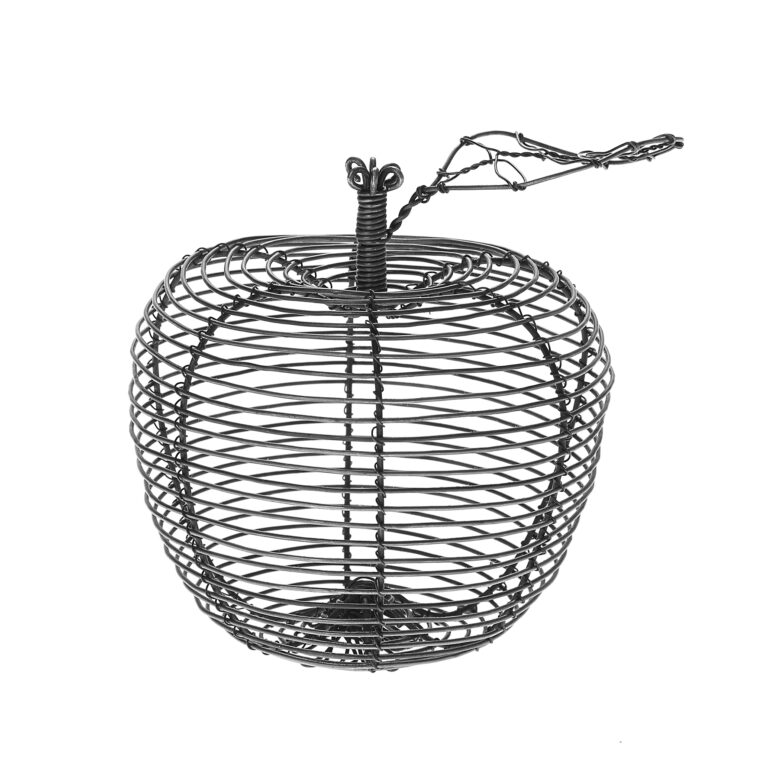
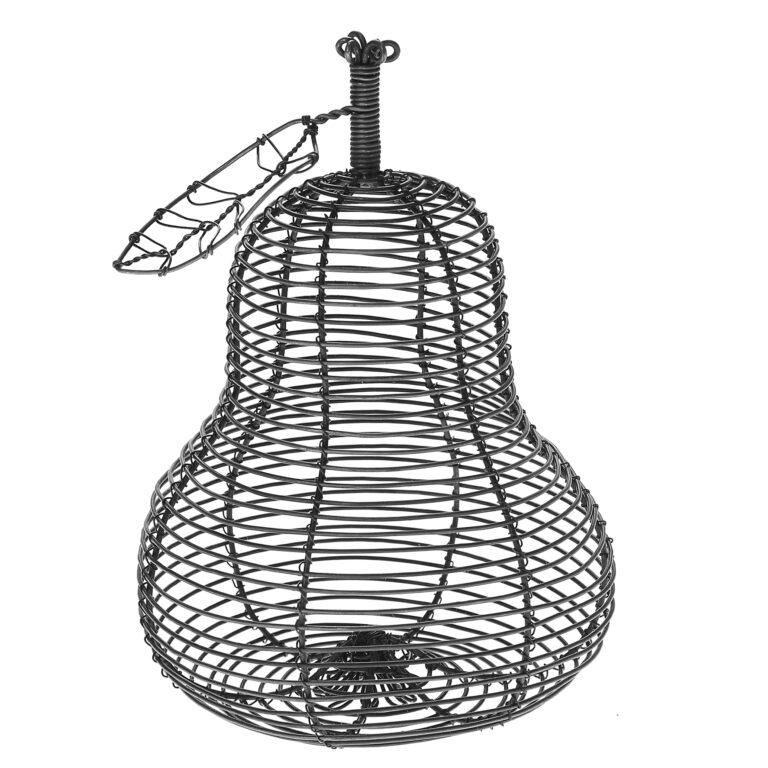
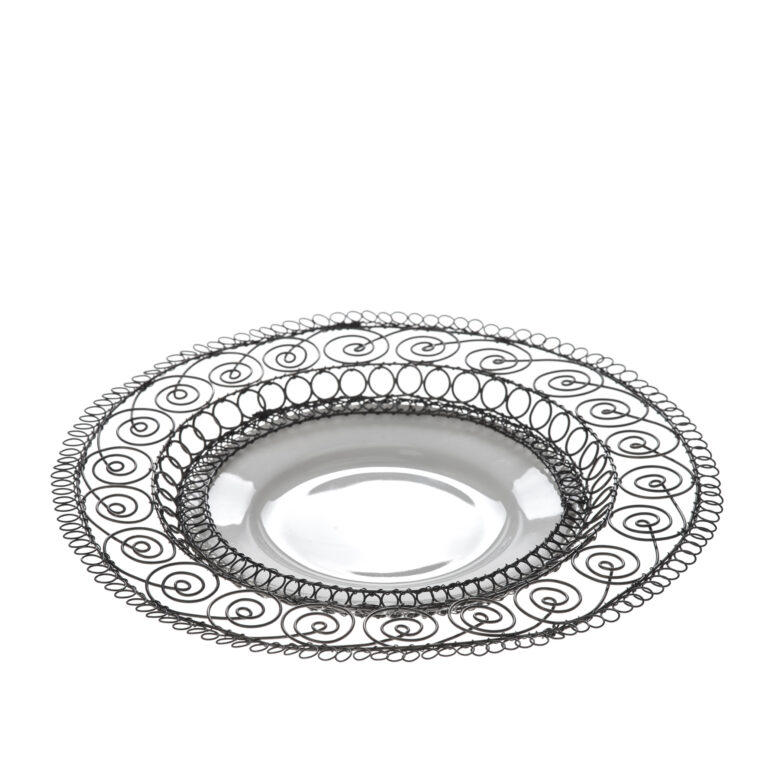
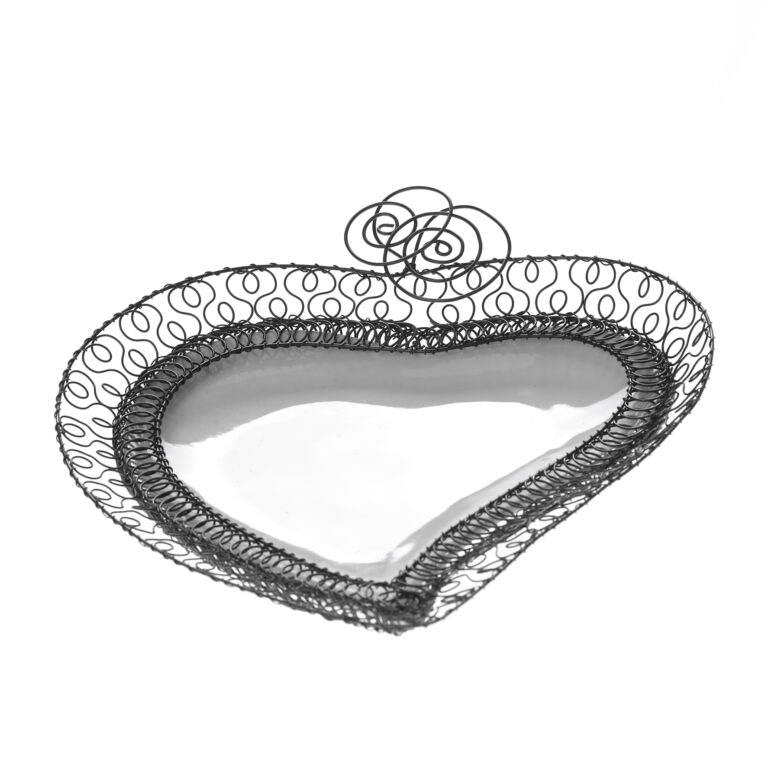
Her work is based on classic wire craft techniques, which in the past were used to weave baskets with linear ornamentation. The author makes traditional utility items such as baskets, bowls, and woven plates. She likes to combine traditional techniques with textile elements, which she uses mainly in the creation of jewelry, home accessories, and seasonal Christmas and Easter decorations. She is currently enriching her work with new artistic trends such as tinning and stained glass. Her portfolio also includes original spatial works, figurative motifs inspired by nature, and small-scale architecture, which she creates according to her own designs.
The aim of her work is to raise awareness of this unique craft. At the beginning of her courses, she always familiarizes participants with the history of wire craft, traditional products, and technological processes. While she focuses on preserving original methods and materials when working with adults, she chooses simplified procedures and playful wire finishing with beads, buttons, or wood when working with children. He teaches his students to respect manual work, safety, and the proper use of too ls.
She has created a website for her own needs and for others interested in the craft. Visitors will find a gallery of her work, a historical overview of wire craft, a list of exhibitions, and specialist literature. Through her blog, she also shares simple instructions for wire craft and describes the process of creating her works.
She does not perform folk art as her main source of income, although she approaches it with a high degree of professionalism. She is currently on partial disability pension for health reasons, but this does not prevent her from actively collaborating with ÚĽUV as a course lecturer.
She procures her own materials and tools, focusing mainly on specialized tools for jewelry making from foreign sources. She has made many of the tools for bending and twisting wire herself from recycled materials. She inventively adapts traditional wireworking techniques for working with copper or silver-plated wire and often replaces classic sewn lace with crocheted mesh, complementing her works with semi-precious stones or other interesting materials.
For her, wirework is the perfect combination of work and relaxation; she is fascinated by its history, clean lines, and versatility. Through her work, she strives to ensure a successful future for the craft. She finds the greatest fulfillment in passing on her knowledge to children, whom she teaches to be enthusiastic about handicrafts and to follow the birth of their own works of art.