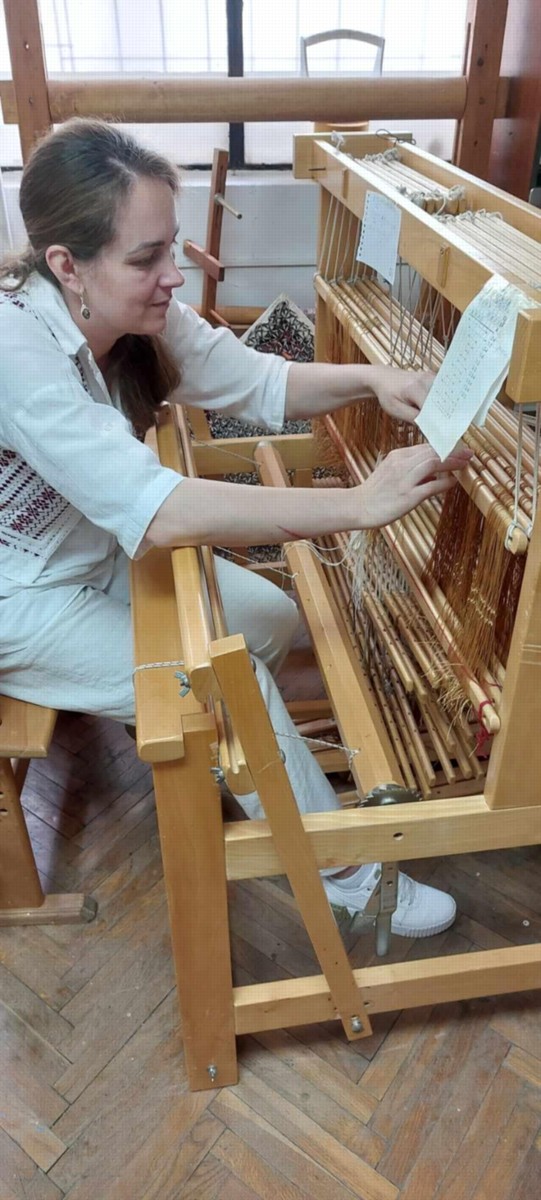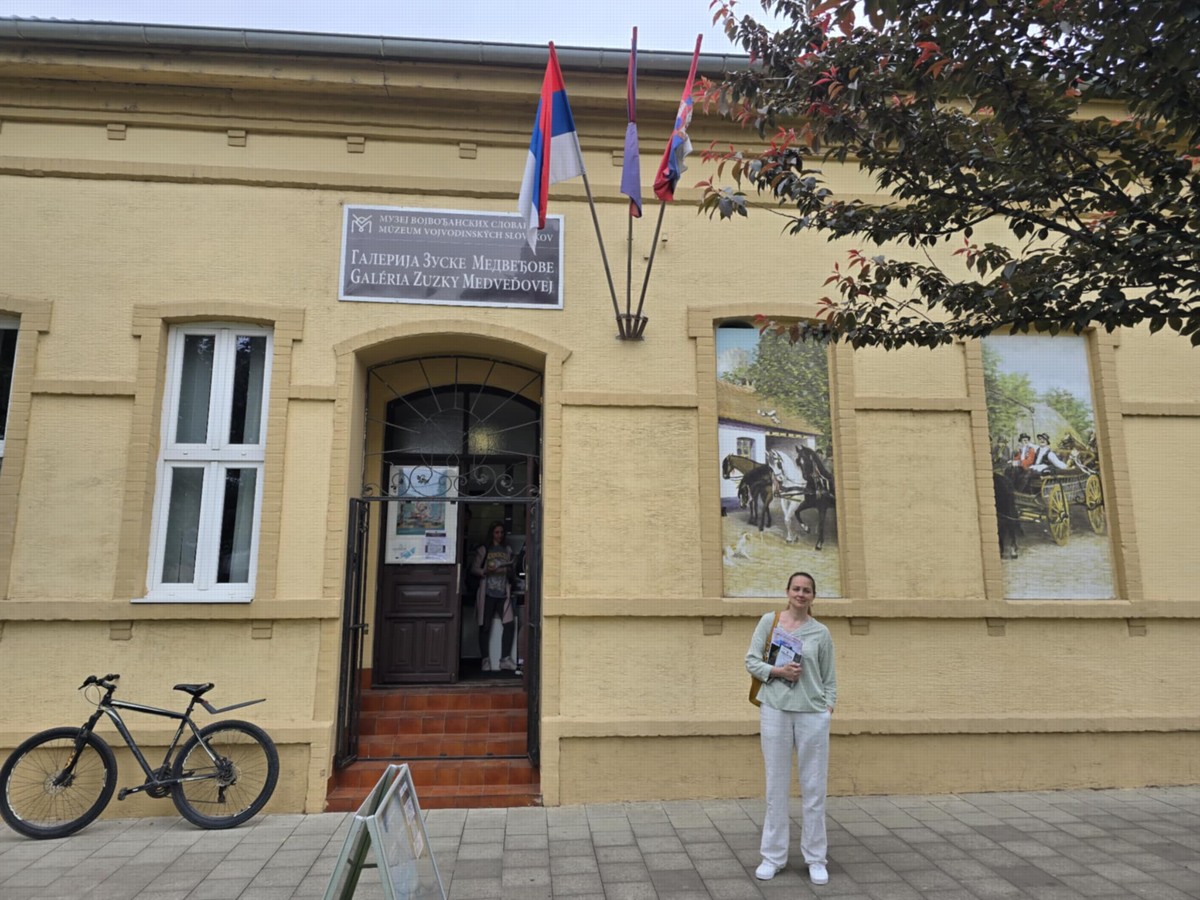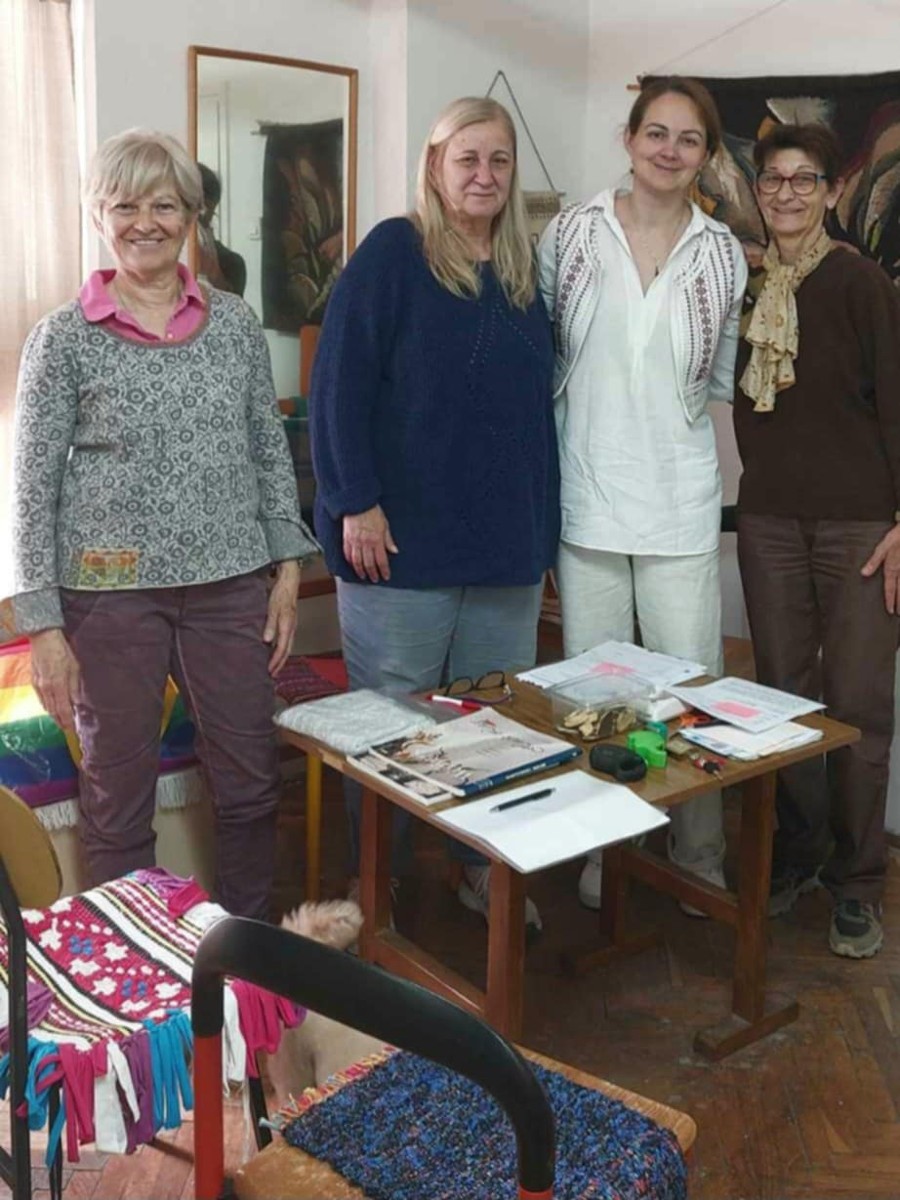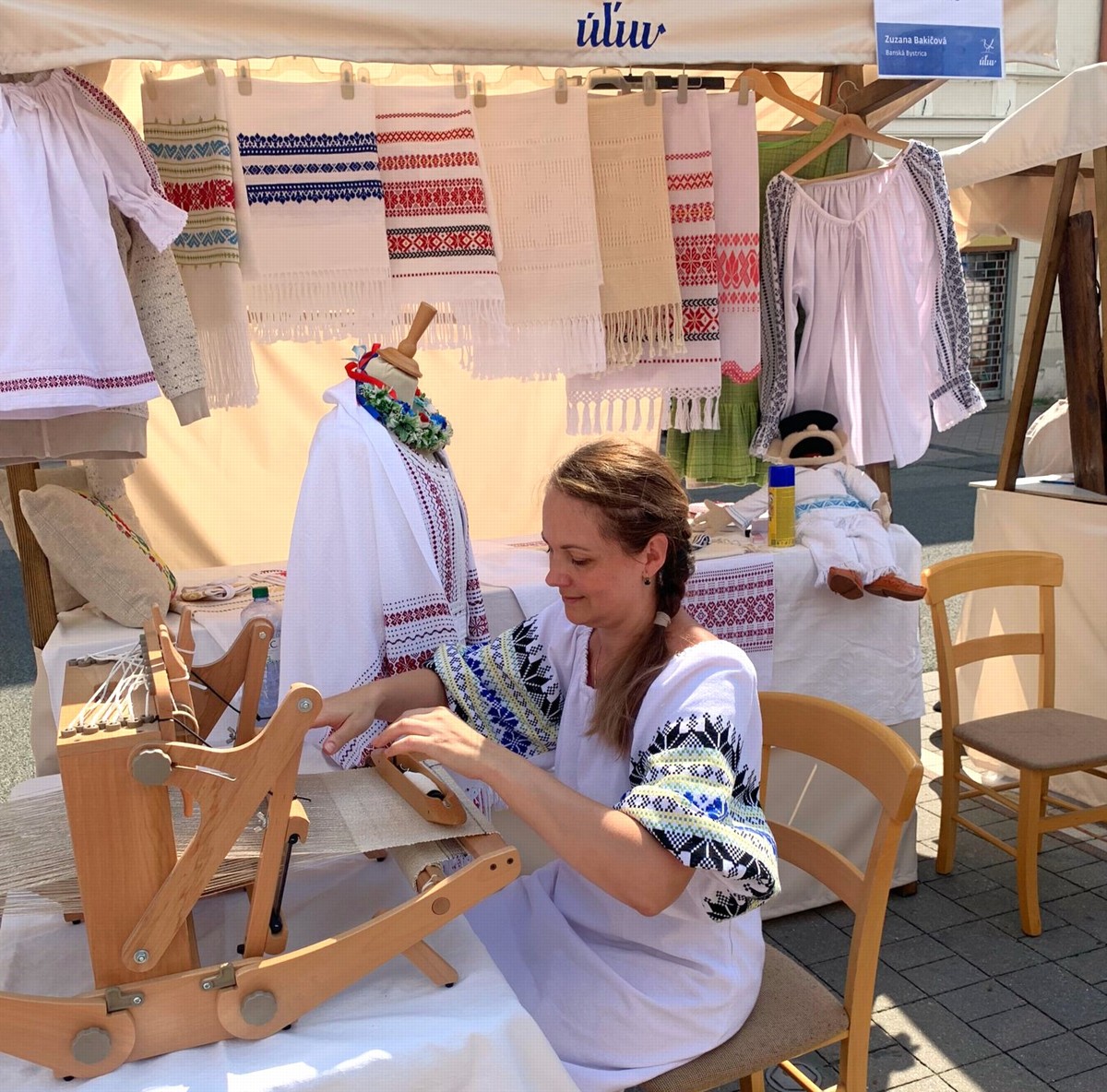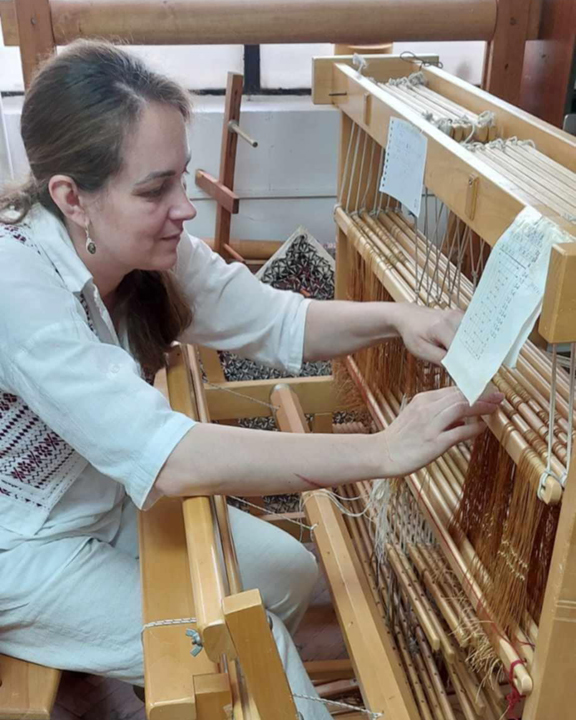
The inner drive of the weaving instructor pushes her to constantly challenge herself and continue progressing. For this reason, she was delighted to take the opportunity offered by the Erasmus+ programme to visit weavers in Novi Sad, Vojvodina—something she had long wished to do. As a craftswoman, she was curious to see whether woven components (such as decorative shoulder pieces and aprons) were still preserved on traditional garments, as Slovaks had migrated to the Lower Land in the 18th century from villages with strong weaving traditions (Málinec, Kokava nad Rimavicou, etc.).
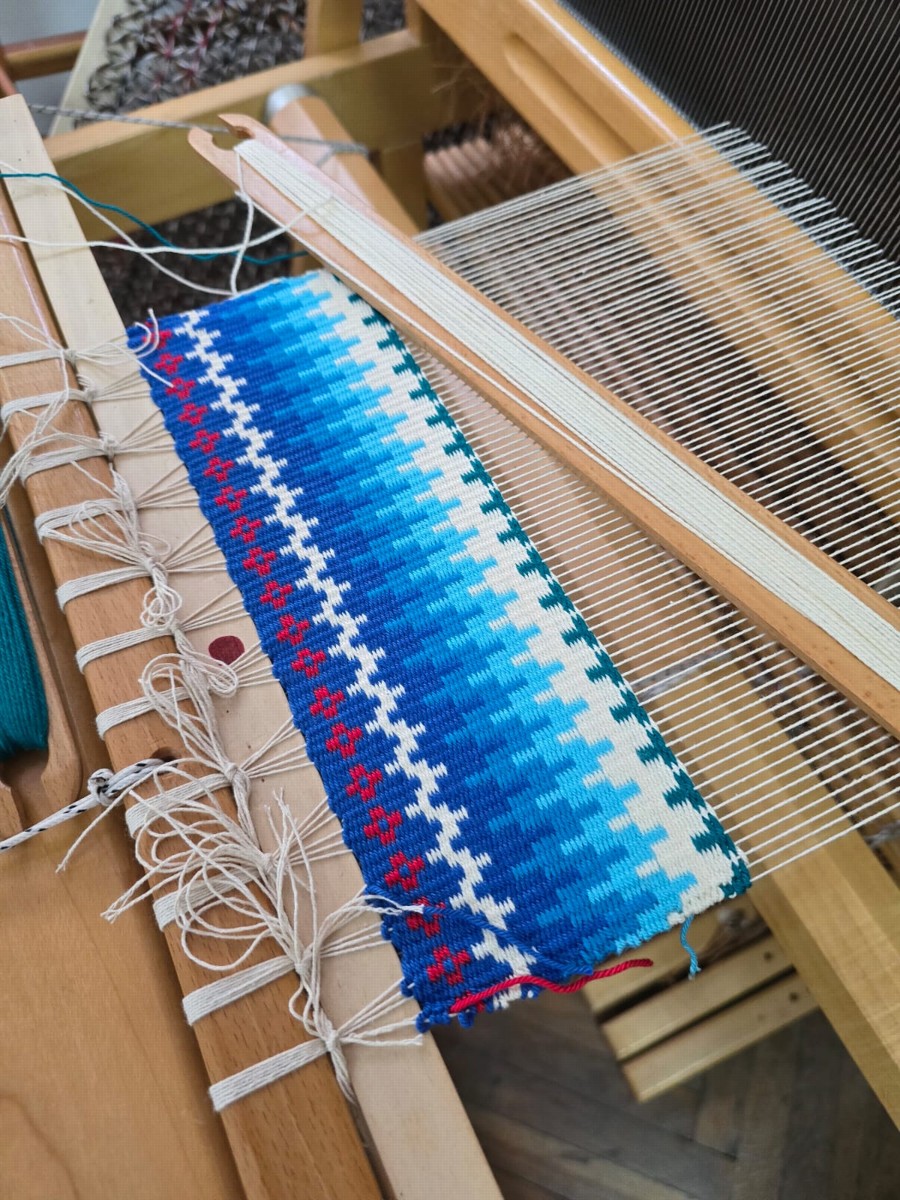
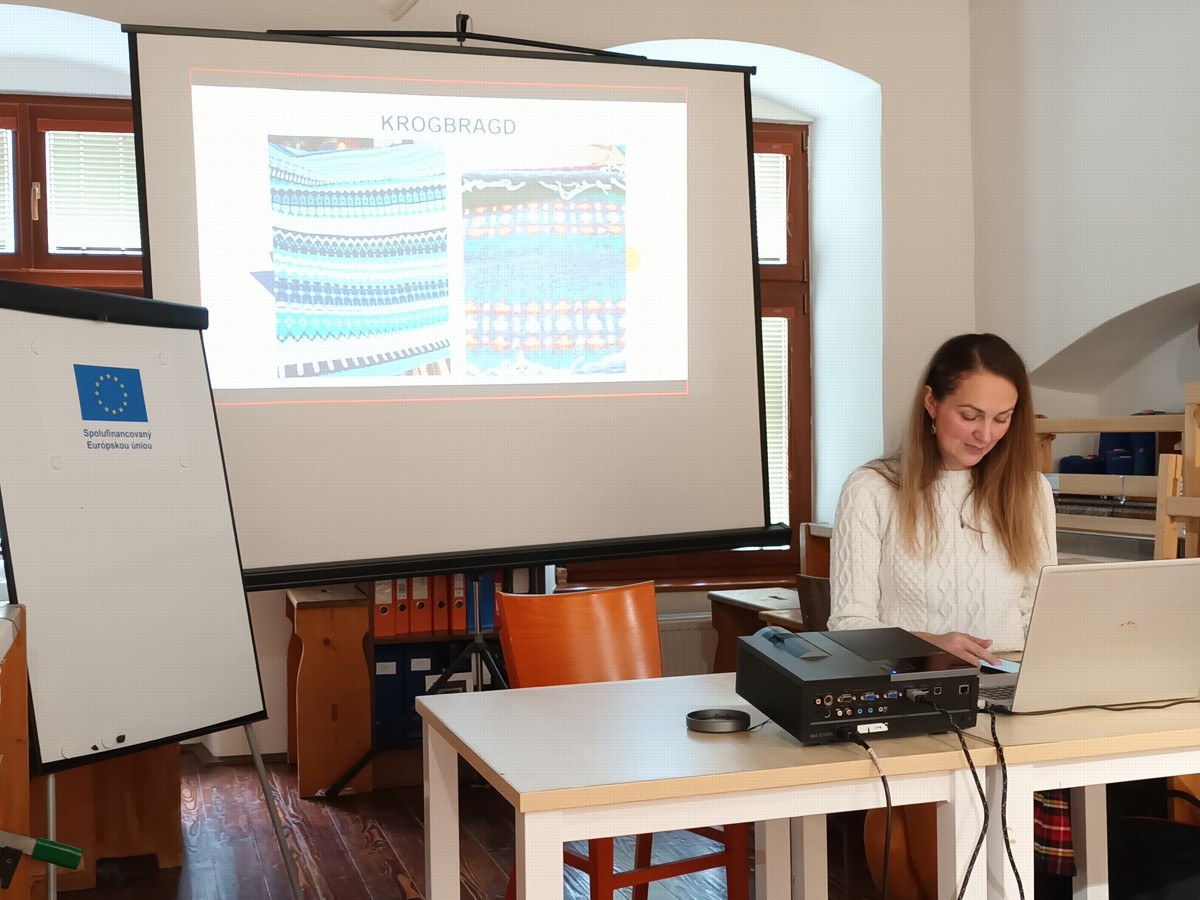
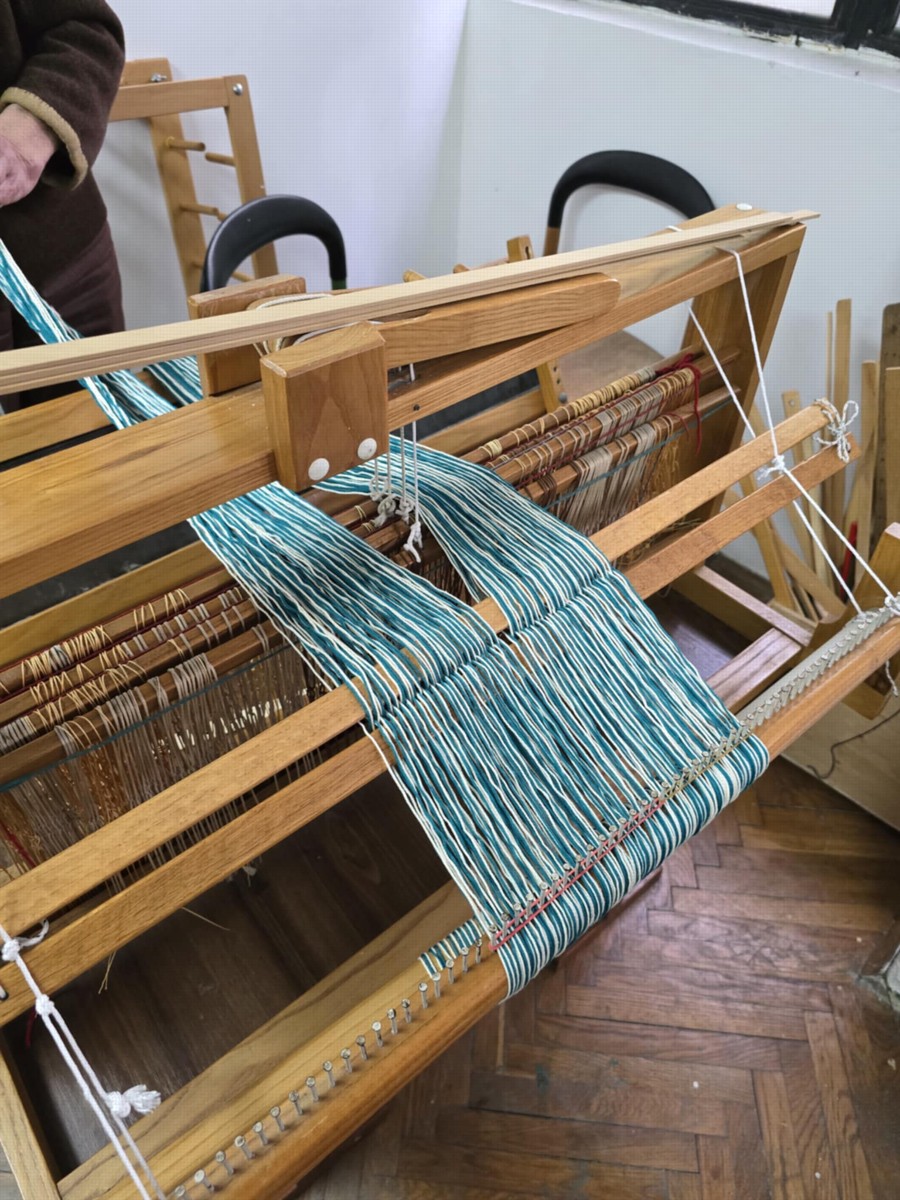
The Novi Sad Udruženje tkalja (Weavers’ Association) includes in its portfolio both traditional Serbian and modern weaving techniques. In addition to openwork weaving, which is also known in Slovakia, she learned, among other things, a technique called klečanje. It is similar to tapestry weaving but has a specific structure and is often used for woven rugs, handbags, and wall hangings. From the modern techniques offered by the Serbian association, she learned summer & winter, krokbragd, doubleweave, and others.
“Since my hosts were Serbian, on the first day we spoke only in English. Gradually, however, we started adding Serbian and Slovak words, and by the end of the stay, we hardly used English at all. Weaving practice broke down language barriers and connected us on a personal, even friendly level,,” says Z. Bakičová, recalling the professionally and personally enriching moments spent in Serbia..
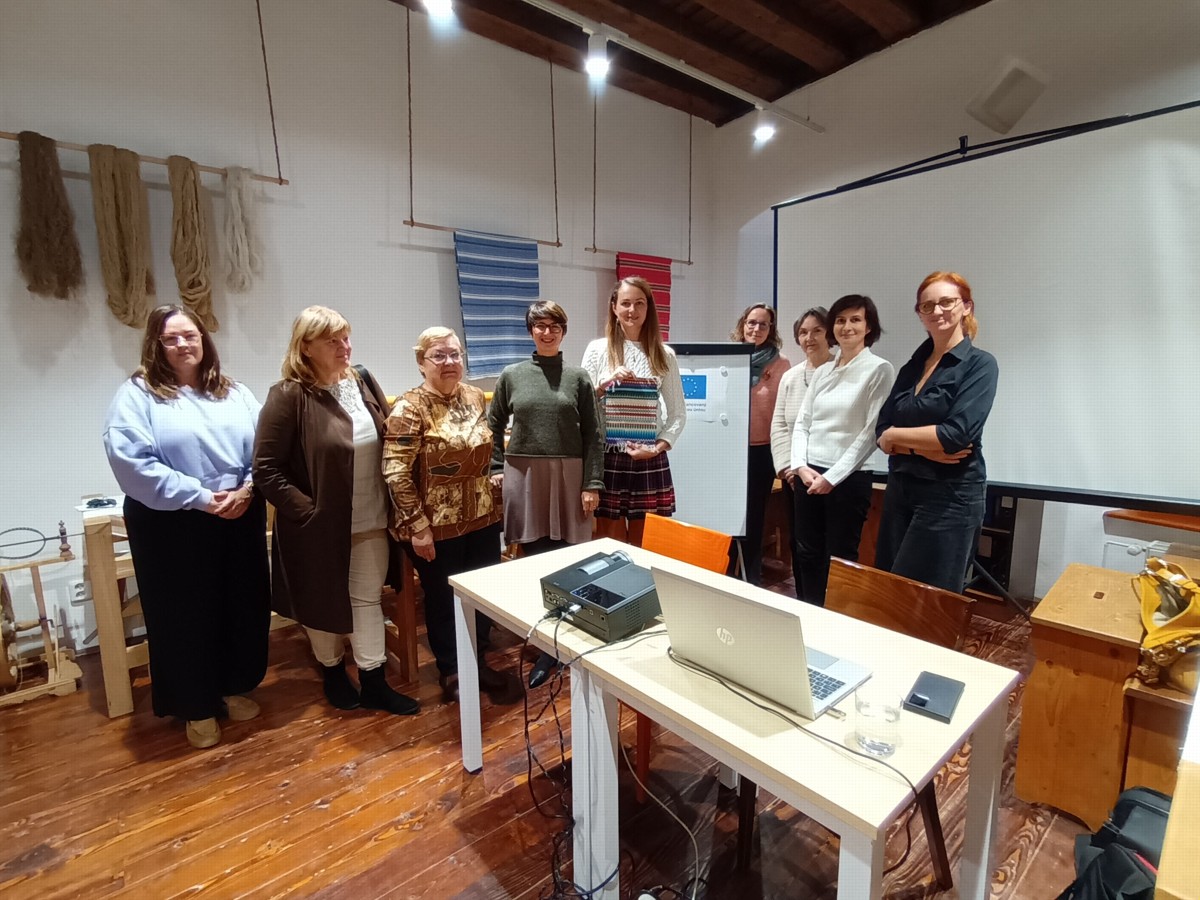
Zuzana Bakičová shared the knowledge gained during her mobility with the ÚĽUV instructors during a lecture combined with a workshop at the ÚĽUV Regional Craft Centre in Banská Bystrica and during a workshop at the ÚĽUV Regional Craft Centre in Košice.
Outcomes of the CRAFTMOVE project
Show methodical Sheet in PDF
(PDF 5 MB)
Show sample book in PDF
(PDF, 2 MB)
Show presentation in PDF
(PDF 11 MB)
Show presentation in PDF
(PDF, 5 MB)
Gallery